全文/ The Text (3)
Note: You can get a copy of the complete text and translation here.
[This section is about how and what the learner should learn]fán xùn méng xū jiǎng jiù
凡 训1 蒙2 须 讲 究
xiáng xùn gǔ míng jù dòu
详 训 诂3 明 句 读4
When instructing new learners, one must explain and analyze.
Examine classical texts in detail, understand the rhythm and structure.
注释/Notes
- 训: instruction.
- 蒙: ignorant, naive.
- 训诂: explanations of the classical texts.
- 句读: end of a sentence, full stop, any breaks in a long passage.
大意/General Meaning
There must be a method to instruct new learners. They should be taught to analyze and understand the meanings in the sentences for various classical texts. They should also be taught on how to read the sentences and know its rhythm and when to pause.
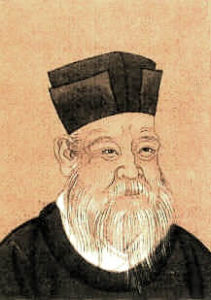
朱熹 (Zhu Xi)
wéi xué zhě bì yǒu chū
为 学 者 必 有 初
xiǎo xué zhōng zhì sì shū
小 学1 终 至 四 书2
lún yǔ zhě èr shí piān
论 语 者 二 十 篇
qún dì zǐ jì shàn yán
群 弟 子 记 善 言
All students must start somewhere.
When one has completed the primary learning, one can move on to the Four Books.
Within the twenty chapters of the Analects,
Confucius’ disciples recorded his wise words.
注释/Notes
- 小学: a book written by Zhu Xi(朱熹), who lived during the Southern Song era, for children then, sometimes translated as the Book of Primary Learning.
- 四书: the four Chinese classical books: The Analects《论语》, Mencius《孟子》, The Great Learning《大学》, The Doctrine of the Mean《中庸》).
大意/General Meaning
Every learner should start at the beginning. In ancient China, this usually refers to the classical text known as the Book of Primary Learning where the child was taught how to recognize, read and write basic Chinese characters. Once the student has grasped the basic vocabulary, he/she should then move on to study the “Four Books”, starting with “The Analects”.
“The Analects” is a book that recorded Confucius’ teachings. There are twenty chapters and this book was said to be co-authored by Confucius and his disciples as they also recorded the conversations they had with their teacher.
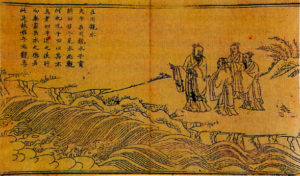
Confucius and his students (Ming Dynasty)
孔子与弟子 (明)
mèng zǐ zhě qī piān zhǐ
孟 子1 者 七 篇 止
jiǎng dào dé shuō rén yì
讲 道 德 说 仁 义
zuò zhōng yōng zǐ sī bǐ
作 中 庸2 子 思 笔
zhōng bù piān yōng bù yì
中 不 偏3 庸4 不 易5
Mencius was written in seven chapters.
It discussed ethics, and about benevolence and justice.
The Doctrine of the Mean written by Zisi
Showed what it would take to be unbiased and unwavering.
注释/Notes
- 孟子: Mencius, name of the author and the book. A classical philosophical text on morals and values. One of the four Chinese classical books.
- 中庸: the Doctrine of the Mean, another classical philosophical text. Written by Zi Si (子思) who was Confucius’ grandson.
- 偏: bias, deviation.
- 庸: constant, unchanging.
- 易: change.
大意/General Meaning
Mencius, 《孟子》, by Meng Ke (孟轲, sometimes known as Mencius) is a classical work that has seven sections and its main contents are about morals as it aims to promote benevolence.
The Doctrine of the Mean, 《中庸》, by Zi Si is one of the four classical books. The first word zhong”中” means to be impartial and not leaning either left or right. The second word yong”庸” means to be consistent and unwavering. It was said to be part of the Records of Rituals (《礼记》) before the scholar, Zhu Xi (朱熹), took it out to form a book on its own during the Southern Song dynasty.
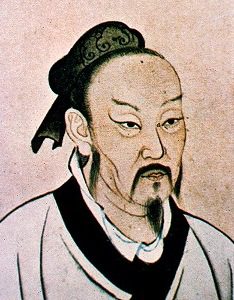
Meng Ke (or Mencius) 孟轲(孟子)
zuò dà xué nǎi zēng zǐ
作 大 学1 乃 曾 子2
zì xiū qí zhì píng zhì
自 修3 齐4 至 平 治5
xiào jīng tōng sì shū shú
孝 经6 通7 四 书 熟8
rú liù jīng shǐ kě dú
如 六 经9 始 可 读
The Great Learning was written by Zengzi.
First cultivate one self, then organize one’s family, finally one can govern to create an orderly and peaceful society.
On mastering the Filial Classics and the Four Books,
The learner can begin to read the Six Classics.

I reflect 3 times a day
注释/Notes
- 大学: The Great Learning, another Chinese classical book.
- 曾子: author of The Great Learning, also known as Zeng Cen (曾参). He was Confucius’ student. Famous for his quote, “I reflect on myself three times a day (吾日三省吾身)”.
- 修: from 修身 which means to cultivate oneself and to correct one’s faults and shortcomings.
- 齐: from 齐家 which means to put one’s house in order through one’s own efforts
- 平治: 治refers to managing the country and 平 means to bring order to the world. Together, they mean to manage the country to have order and peace.
- 孝经: Another classical children text that talked about filial piety. Author unknown.
- 通: understood.
- 熟: familiar with.
- 六经: The six ancient Chinese classics.
大意/General Meaning
The Great Learning espoused the eight steps in life as described in Confucianism. The steps in order: understand the physics of life, acquire knowledge, develop sincerity, banish evil thoughts, cultivate the character, manage the household well, manage the country well, bring peace and order to all(格物、致知、诚意、正心、修身、齐家、治国、平天下). This book was also part of the Records of Rituals (《礼记》) before the scholar Zhu Xi(朱熹) took it out to form a book on its own during the Southern Song dynasty.
After having read the Filial Classics and the Four Books, the learner can start to read and study the six classics.
shī shū yì lǐ chūn qiū
诗1 书2 易3 礼4 春 秋5
hào liù jīng dāng jiǎng qiú
号 六 经6 当 讲 求
yǒu lián shān yǒu guī cáng
有 连 山7 有 归 藏8
yǒu zhōu yì sān yì xiáng
有 周 易9 三 易10 详
The books of Songs, History, Changes, Music and Rituals, together with the Spring and Autumn Annals
Form the six classics that should be taught and learnt.
The Lianshan, Guicang and Zhouyi are three parts of the Book of Changes.
注释/Notes
- 诗: The Book of Poetry, also known as The Book of Songs《诗经》.
- 书: The Book of History《尚书》.
- 易: The Book of Changes《易经》(or sometimes known as 《周易》).
- 礼: The Book of Rituals, also known as the Book of Rites《礼经》
- 春秋: The Spring and Autumn Annals《春秋》.
- 六经: The six ancient Chinese classics
- 连山: An ancient text said to be written by one of China’s earlier emperor, Fu Xi伏羲.
- 归藏: An ancient text said to be another version of 《连山》.
- 周易: Another ancient text also said to be a different version of 《连山》, edited by Duke of Zhou during the Shangzhou(商周) period.
- 三易: refer to the original three Books of Changes – 《连山》,《归藏》and《周易》.
大意/General Meaning
The Book of Songs《诗经》, The Book of History《尚书》, The Book of Changes《易经》, The Records of Rituals《礼记》, The Book of Music《乐经》, The Spring and Autumn Annals《春秋》 are the six classics. Of these, the Book of Music appeared to have been lost or was assimilated into the Book of Songs and these are now commonly known as “The Five Classics (五经)”. In addition, the Record of Rituals was said to contain three parts: Formal Rituals(《仪礼》), the Rituals of Zhou(《周礼》) and the Record of Rituals(《礼记》).
The Book of Changes was said to have originated from Emperor Fuxi(伏羲). During the Xia Dynasty, it was known as Lian Shan(《连山》). The version used in the Shang Dynasty is Gui Cang(《归藏》). The Duke Zhou at the end of the Shang dynasty developed another version known as Zhou Yi(《周易》). Hence there were three known versions.
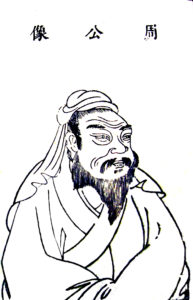
周公,Duke of Zhou
yǒu diǎn mó yǒu xùn gào
有 典1 谟2 有 训3 诰4
yǒu shì mìng shū zhī ào
有 誓5 命6 书7 之 奥8
wǒ zhōu gōng zuò zhōu lǐ
我 周 公9 作 周 礼10
zhù liù guān cún zhì tǐ
著 六 官11 存 治 体
Mandates, plans, petitions, admonitions,
Oaths and orders, the Book of History is profound.
The Duke of Zhou wrote the Rituals of Zhou,
About the six classes of officials that form the government.
注释/Notes
- 典: recorded the mandates on how states were established.
- 谟: recorded the plans on how to rule one’s state.
- 训: recorded the ministers’ petitions and advice to rulers.
- 诰: about admonitions issued by past emperors.
- 誓: the military oaths the soldiers had to take.
- 命: orders, proclamations issued by the emperors.
- 书: The Book of History《尚书》, sometimes called the Book of Documents. There are six sections in this book: mandates (典), plans (谟), petitions (训), admonitions (诰), oaths (誓), orders (命).
- 奥: profound, difficult to understand or comprehend.
- 周公: Duke of Zhou, ruled the State of Zhou, also known as Ji Chang 姬倡.
- 周礼: A book by the Duke of Zhou which described the court rituals and political system of the country during the Shangzhou period. There are six sections in this book (known as “六宫”).
- 六官: the six sections in《周礼》: Heaven 《天宫》, Earth《地宫》, Spring《春宫》, Summer《夏宫》, Autumn《秋宫》, Winter《冬宫》.
大意/General Meaning
There are six sections in the Book of History, its contents are comprehensive and profound.
The Rituals of Zhou (《周礼》) was said to be authored by later historians and not the Duke of Zhou (周公) as it appeared only in the Western Han era. Its main contents are the rites and rituals observed by people at the courts of the Zhou dynasty. It was attributed to the Duke of Zhou, probably because he and his son worked to usurp the last emperor of the Shang Dynasty to establish the Zhou dynasty.
dà xiǎo dài zhù lǐ jì
大 小 戴1 注 礼 记2
shù shèng yán lǐ yuè bèi
述 圣 言 礼 乐 备3
yuē guó fēng yuē yǎ sòng
曰 国 风 曰 雅 颂
hào sì shī dāng fěng yǒng
号 四 诗4 当 讽 咏5
The elder and younger Dai wrote the notes to the Record of Rites,
That recorded the words spoken by sages and all ceremonial affairs.
The Airs of State, Court Hymns and Eulogies
Are the four songs which should be recited and remembered.
注释/Notes
- 大小戴: Dai De 戴德 and his nephew Dai Sheng 戴胜.
- 礼记: The Records of Rituals that recorded the court rites and rituals in ancient China.
- 备: complete, comprehensive.
- 四诗: the four songs.
- 讽咏: memorize and be able to recite.
大意/General Meaning
Dai De expounded on and interpreted the original Records of Rituals, 《礼记》, to create his commentary known as Da Dai Records of Rituals, 《大戴礼记》which had 85 chapters. His nephew further edited and truncated the commentary to cut down to 46 chapters to create the Xiao Dai Records of Rituals《小戴礼记》 and this became the version of “the Records of Rituals” that we know today. It is said to be a comprehensive collection of theorems and sayings by ancient sages as well as a description of court rituals and ceremonial rules.
The Book of Songs 《诗经》 contained four segments: airs of state《国风》, major court hymns《大雅》, minor court hymns 《小雅》 and eulogies《颂》, collectively known as the four songs, 《四诗》.
shī jì wáng chūn qiū zuò
诗 既 亡1 春 秋 作2
yù bāo biǎn bié shàn è
寓3 褒4 贬5 别6 善 恶
sān zhuàn zhě yǒu gōng yáng
三 传7 者 有 公 羊
yǒu zuǒ shì yǒu gǔ liáng
有 左 氏 有 榖 梁
The Book of Songs declined and the Annals of Spring and Autumn sprung,
Adages of the praiseworthy and condemned, the difference between good and evil.
With three commentaries written by Gongyang, Zuo and Guliang.
注释/Notes
- 诗既亡: The Book of Songs was lost. Many parts of the original Book of Songs were lost, especially those sections believed to criticize the different governments.
- 春秋作: Confucius authored the Spring and Autumn Annals. This book was intended to describe the sections that were missing from the Book of Songs.
- 寓: parables, stories.
- 褒: praiseworthy.
- 贬: what should be condemned.
- 别: distinguished, differentiated.
- 传: commentary, supplementary text that explains the materials in a classical text.
大意/General Meaning
In Eastern Zhou period, many songs that criticized the governments and exposed the unsavory deed of that period were lost. Many believed what remained of the Book of Songs was only a small section. Hence Confucius wrote the Annals of Spring and Autumn to present what was good and bad about the governments during the Spring and Autumn era as well as his philosophy to promote the good and punish the evil.
After Confucius had written the Annals, there were three well-known commentaries to the Spring and Autumn Annals. The first one was written by Gong Yang 公羊 (Gong Yang Gao 公羊高) in the State of Qi(齐) during the Warring States period. The next one was by Zuo Shi 左氏 (Zuo Qiu Ming 左丘明) from the State of Lu(鲁) in the Spring and Autumn period. Another is written by Gu Liang 榖梁 (Gu Liang Chi 榖梁赤) was written during the Warring States period.
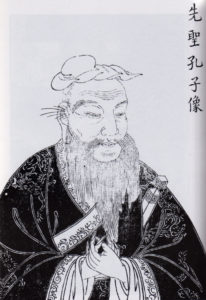
孔子(丘仲尼), Confucius
jīng jì míng fāng dú zǐ
经 既1 明 方2 读 子3
cuō qí yào jì qí shì
撮4 其 要 记 其 事
wǔ zǐ zhě yǒu xún yáng
五 子5 者 有 荀 扬
wén zhōng zǐ jí lǎo zhuāng
文 中 子 及 老 庄
After one has understood the classics, one should move on to the philosophers.
Identify the key points and remember the related facts.
The five philosophers are Xunzi, Yangzi,
Wenzhongzi, Laozi and Zhuangzi.
注释/Notes
- 既: already.
- 方: beginning to.
- 子: a particular school of thought or philosophy. Ancient Chinese literary works are divided into classics 经, history史, philosophies子 and collections集. Any book that described a particular school of thought or philosophy and could held up on its own belongs to the “子” family.
- 撮: extract.
- 五子: the key authors of five schools of thought.
大意/General Meaning
After having studied the important classical texts on Confucianism, the learner should then move on to study and understand the other philosophers from the “Hundred Schools of Thought(诸子百家)”. And as there are many different schools of thought and many authors, it is challenging to read and understand all of it. Instead, one should focus on the key points and remember the important facts recorded in these books.
Of these philosophers, the more well-known ones are Xunzi荀子(author of book with the same name《荀子》, he was also known as Xun Kuang荀况), Yangzi扬子(author of Taixuan Classic《太玄经》and Fayan《法言》, he was also known as Yang Xiong杨雄), Wen Zhongzi文中子(author of Yuan Classics《元经》and ZhongShuo《中说》, also known as Wang Tong王通), Laozi 老子(author of Dao De Jing《道德经》, a classical text for Taoism. Laozi is also known as Li Er李耳) and Zhuangzi庄子 (author of a book with the same name《庄子》, also known as Zhuang Zhou庄周).
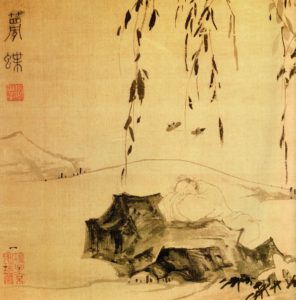
梦蝶(明), Zhuangzi Dreaming of a Butterfly, Ming dynasty.
“昔者庄周梦为胡(蝴)蝶,栩栩然胡(蝴)蝶也。自喻适志与,不知周也。俄然觉,则蘧蘧然周也。不知周之梦为胡(蝴)蝶与?胡(蝴)蝶之梦为周与?周与胡(蝴)蝶,则必有分矣。此之谓物化。”
“Now I do not know whether I was then a man dreaming I was a butterfly, or whether I am now a butterfly, dreaming I am a man.”
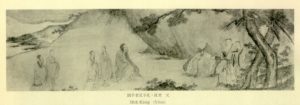
孔子见老子图, A Meeting of Confucius and Laozi By 史杠(元), Shih Kang, Yuan dynasty.
“鸟,吾知其能飞;鱼,吾知其能游;兽,吾知其能走。走者可以为罔,游者可以为纶,飞者可以为矰。至于龙,吾不能知其乘风云而上天。吾今日见老子,其犹龙邪!”
“(Literally) I know birds can fly, fishes can swim and beasts can run. I can use nets to capture the beast, fishing rods to catch the fishes, arrows to shot down the birds. But I do not know what to do with a dragon as it rides the wind and flies to the sky. Today I met Laozi, he must be the dragon!”
Image sources
[1] 朱熹 (Zhu Xi)Public Domain. [2] Confucius and his students, Ming Dynasty
Public Domain. [3] 孟子, Mencius
Public Domain (https://commons.wikimedia.org/wiki/File:Mencius2.jpg)
Portrait: Ink and color painting on silk, National Palace Museum, Taipei. [4] 周公, Duke of Zhou
By Wang Qi (1529 – 1612) [Public domain], via Wikimedia Commons.
(https://commons.wikimedia.org/wiki/File%3AZhou_gong.jpg). [5] 孔子(丘仲尼), Confucius

Public Domain. [6] 梦蝶, Zhuangzi Dreaming of a Butterfly
Ming dynasty
Mid-16th century Ink on silk, 29.4 x 51.4 cm.
Public Domain. [7] 孔子见老子图, A Meeting of Confucius and Laozi
By 史杠, Shih Kang, Yuan dynasty.
Public Domain.